Introduction
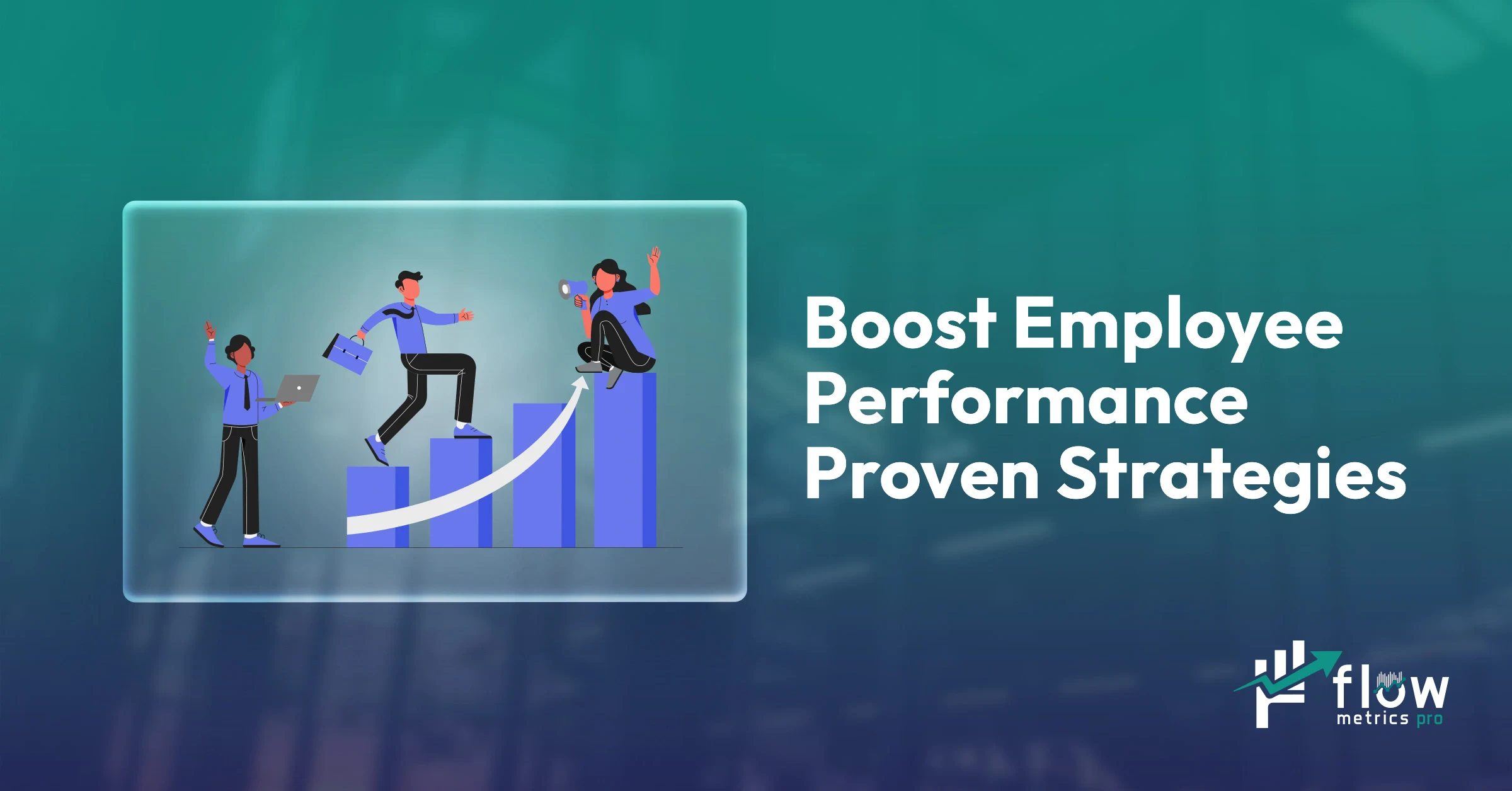
Employee performance drives business success in every industry. When employees work at their peak potential, companies experience higher productivity, increased profitability, and smoother operations. However, boosting team performance requires more than tracking hours or counting completed tasks. Organizations need a complete strategy that includes goal setting, regular feedback, skill development, employee recognition, and modern employee productivity tools.
Flow Metrics Pro delivers the comprehensive solution businesses need to manage and elevate employee performance. This powerful platform provides data-driven insights and real-time tracking that help companies measure performance while building a culture of continuous improvement. In this article, we’ll explore proven strategies to enhance how employees work and demonstrate how the right performance management system transforms productivity across your organization.
Understanding Employee Performance in Today’s Workplace
Employee performance measures how effectively team members fulfill their job responsibilities and contribute to company objectives. This multifaceted concept combines several factors: task completion, work quality, collaboration skills, and problem-solving capabilities. High-performing employees consistently meet or exceed expectations, driving organizational success forward.
Effective performance management helps leaders identify both strengths and improvement opportunities. Regular monitoring and assessment enable managers to make informed decisions about training programs, goal adjustments, and employee engagement strategies. Companies that prioritize performance reviews and continuous feedback create environments where employees work with greater purpose and motivation.
Essential Metrics for Tracking Team Performance
Measuring employee performance effectively requires clear, specific metrics that align with your company’s strategic goals. Consider tracking these key performance indicators:
Task Completion Rate: Track how many assignments employees complete on time and to the required standard. This metric reveals productivity patterns and helps identify bottlenecks in workflows.
Quality of Work: Assess the accuracy, thoroughness, and attention to detail in deliverables. Quality metrics prevent the trap of prioritizing speed over excellence.
Attendance and Punctuality: Consistent attendance and punctuality demonstrate an employee’s commitment and reliability. These basics form the foundation of team performance.
Collaboration and Teamwork: Evaluate how well employees work within teams and contribute to collective efforts. Strong collaboration drives innovation and accelerates problem-solving.
Innovation and Problem-Solving: Measure an employee’s ability to develop creative solutions and propose valuable ideas. This metric becomes increasingly important in competitive markets.
Customer Satisfaction Scores: Collect feedback from customers, especially for client-facing team members. Customer insights provide external validation of employee performance.
KPI Achievement: Monitor progress toward key performance indicators set by your company or department. KPIs create accountability and focus efforts on strategic priorities.
Modern employee productivity tools make tracking these metrics straightforward, providing clear visibility into each team member’s performance and highlighting areas that need attention.
The Power of Clear Goal Setting
Setting clear, measurable, and achievable goals ranks among the most effective strategies for improving employee performance. When employees work with a clear understanding of expectations, they can channel their energy toward meeting or exceeding those targets. Well-defined goals also give employees a sense of purpose and direction that fuels daily motivation.
The SMART framework—Specific, Measurable, Achievable, Relevant, and Time-bound—helps leaders create effective goals that drive results. These goals give employees concrete targets to work toward and make progress easy to measure. Regular performance reviews allow you to adjust goals based on changing circumstances and employee development.
Flow Metrics Pro simplifies goal setting and tracking with an intuitive dashboard that monitors both individual and team progress. This ensures everyone stays aligned with organizational objectives while maintaining the flexibility to adapt as business needs evolve.
Delivering Regular and Constructive Feedback
Feedback serves as the cornerstone of employee development. When managers provide both positive reinforcement and constructive criticism, employees work with a clear understanding of their strengths and improvement areas. Timely, actionable feedback motivates employees to enhance their performance and address weaknesses before they become problems.
Positive Feedback Drives Motivation
Positive feedback reinforces excellent behavior and encourages employees to maintain high standards. Recognizing achievements—whether significant milestones or small wins—boosts morale and creates a culture of appreciation. You can deliver recognition through verbal praise, public acknowledgment in meetings, written commendations, or small rewards.
Constructive Feedback Accelerates Development
Constructive feedback focuses on areas where employees can grow. Rather than simply pointing out mistakes, effective feedback provides actionable solutions and guidance. When managers deliver constructive feedback thoughtfully, they help employees work more effectively, reduce errors, and build confidence.
Data-backed feedback carries more weight than subjective opinions. Real-time performance tracking enables managers to provide specific, accurate feedback based on measurable results rather than general impressions. This approach makes performance reviews more productive and helps employees understand exactly where and how to improve.
Investing in Training and Continuous Development
Ongoing training and skill development prove crucial for sustained employee performance. As industries evolve rapidly, employees need to continuously expand their knowledge and capabilities to stay competitive. Providing growth opportunities increases employee engagement, job satisfaction, and overall team performance.
Training programs take many forms: online courses, workshops, mentorship programs, conferences, or hands-on learning experiences. Regular training ensures employees stay current with industry trends and acquire new skills applicable to their roles. Companies that invest in employee development see higher retention rates and stronger performance across all metrics.
Smart employee productivity tools help managers track training progress and identify skill gaps that need attention. These insights enable businesses to create targeted development plans that address specific needs, keeping teams competitive in rapidly changing markets.
Recognition and Rewards for Outstanding Performance
Recognizing and rewarding employee performance serves as a powerful motivator. When employees work knowing their efforts will be acknowledged, they remain engaged, motivated, and committed to company success. Effective reward systems can be customized to individual preferences and performance levels.
Forms of Employee Recognition
Recognition comes in various forms, each with unique benefits:
Public Acknowledgment: Recognize employees in team meetings, company newsletters, or all-hands gatherings. Public recognition validates effort and inspires others.
Financial Rewards: Offer bonuses, raises, or profit-sharing for exceptional performance. Money matters, especially when tied to specific achievements.
Career Advancement: Provide promotions or professional development opportunities that align with employee aspirations. Growth opportunities often motivate more than short-term rewards.
Flexible Benefits: Consider additional time off, remote work options, or other perks that employees value. Flexibility increasingly ranks as a top priority for today’s workforce.
Recognition programs encourage employees to maintain peak performance. When team members feel appreciated, they demonstrate higher loyalty and consistently deliver quality work. Automated recognition systems ensure no achievement goes unnoticed, helping maintain morale and motivation across the organization.
Building a Positive Work Environment
A positive work environment proves essential for fostering high employee performance. Employees who feel valued and respected work with greater engagement, productivity, and loyalty. Encouraging open communication, collaboration, and mutual respect creates a culture where employees thrive naturally.
Key Elements of Positive Work Culture
Collaboration and Knowledge Sharing: Encourage employees to work together and share expertise freely. Collaborative environments accelerate learning and innovation.
Transparency and Open Communication: Keep employees informed about company goals, challenges, and successes. Transparency builds trust and helps everyone work toward common objectives.
Work-Life Balance: Offer flexible working hours, remote work options, and generous time-off policies. Employees who balance work and personal life perform better in both areas.
Support and Development: Create a culture where employees receive support for professional and personal growth. Investment in people pays dividends in performance and retention.
Organizations that foster positive work environments see improved employee engagement, reduced turnover, and enhanced overall performance. The cultural foundation determines how effectively employees work individually and collectively.
Leveraging Technology for Performance Excellence
Technology enables and accelerates employee performance improvements. Digital employee productivity tools streamline processes, improve communication, and provide real-time performance data. With the right technology, organizations make informed decisions about employee development and performance management strategies.
Flow Metrics Pro exemplifies how modern platforms transform performance management. With features like real-time tracking, comprehensive performance analytics, and sophisticated goal-setting capabilities, this system gives managers the insights they need to optimize how employees work and achieve results.
Fostering Team Collaboration
Collaboration drives innovation and improves overall team performance. When employees work together effectively, they bring diverse perspectives and ideas that lead to superior solutions. Collaborative teams solve problems faster and more efficiently than individuals working in isolation.
Modern platforms support collaboration through shared dashboards, project management features, and communication tools. These capabilities help teams stay aligned on goals, track collective progress, and communicate effectively regardless of physical location.
Conducting Meaningful Performance Reviews
Performance reviews provide structured opportunities to assess employee progress, discuss goals, and plan development. Effective performance reviews happen regularly—not just annually—and focus on future growth rather than past mistakes.
Best practices for performance reviews include:
Preparation: Both managers and employees should prepare with specific examples and data. Performance reviews work best when both parties come ready to engage productively.
Two-Way Dialogue: Encourage employees to share their perspectives, challenges, and aspirations. The best performance reviews involve conversation, not lecture.
Action Planning: End every review with clear next steps and commitments. Actionable plans ensure performance reviews translate into actual improvements.
Documentation: Record key points, agreed-upon goals, and action items. Documentation creates accountability and provides reference points for future reviews.
Regular performance reviews keep employees aligned with expectations and provide opportunities to address concerns before they escalate.
Measuring the Impact of Performance Initiatives
Track the effectiveness of your performance improvement initiatives by monitoring key metrics over time. Look for trends in productivity, quality, employee engagement, and business outcomes. Data-driven evaluation helps you refine strategies and allocate resources to the most effective programs.
Consider measuring:
- Overall productivity gains
- Quality improvement percentages
- Employee engagement scores
- Retention rates
- Customer satisfaction trends
- Revenue per employee
Flow Metrics Pro consolidates these metrics into comprehensive dashboards that make trends visible and actionable. This data-driven approach ensures your performance initiatives deliver measurable business value.
Creating a Culture of Continuous Improvement
The most successful organizations don’t view performance management as a one-time initiative but as an ongoing commitment. Building a culture of continuous improvement means employees work with a mindset of constant learning and development.
Encourage this culture by:
- Celebrating learning from failures, not just successes
- Providing regular opportunities for skill development
- Sharing best practices across teams
- Soliciting and acting on employee feedback
- Modeling continuous improvement from leadership
When continuous improvement becomes part of your organizational DNA, employee performance naturally rises over time.
Conclusion: Maximizing Employee Performance with the Right Tools
Maximizing employee performance requires a comprehensive approach that addresses multiple dimensions of the employee experience. Clear goal-setting, regular feedback, ongoing training, meaningful recognition, and positive work environments all contribute to a high-performance culture.
Flow Metrics Pro streamlines these efforts by providing managers with powerful tools to track, measure, and improve performance systematically. This data-driven performance management system supports employee development while boosting overall productivity and engagement.
Companies that invest in employee productivity tools and performance management systems position themselves for long-term success. By continuously optimizing how employees work and supporting their development, organizations achieve sustainable competitive advantages in today’s fast-paced business environment. The path to better performance starts with the right strategy, tools, and commitment to your people’s success.