“What gets measured gets managed.” This statement is a cornerstone of modern business leadership. When applied to team performance metrics, it serves as a powerful principle for driving growth and efficiency. Without clear data, leaders are left navigating with intuition alone, which can lead to missed opportunities and unresolved bottlenecks.
Consider that studies often show a significant portion of a team’s day is spent on non-core activities like administrative tasks and internal communication. This time, while necessary, can easily overshadow the deep, focused work required to move projects forward. To truly enhance productivity, you need to understand where your team’s time and effort are going with effective Team Performance Metrics.
This is where data-driven insights become invaluable. By using quantifiable metrics, managers can make objective, fair, and strategic decisions that support their teams. This article will explore the essential team performance metrics you should be tracking, explain their significance, and provide a clear framework for using them to achieve tangible improvements in your organization.
What Are Team Performance Metrics?
Team performance metrics are quantifiable measures used to assess the effectiveness and efficiency of a team in achieving its collective goals. These indicators provide objective data that helps leaders evaluate progress, identify areas for improvement, and align team activities with broader business objectives. Instead of relying on guesswork, these metrics offer a clear, data-backed view of how a team is functioning.
For instance, if a software development team is tasked with releasing five new features in a quarter, a key metric would be the number of features successfully deployed on time. This provides a direct measure of their output and adherence to deadlines.
Team-Level vs. Individual-Level Metrics
It’s crucial to distinguish between metrics that measure the team’s collective success and those that focus on individual employee contributions. While both are important, they serve different purposes for Team Performance Metrics.
Team-Level Metrics Focus On:
- Collective Output: The total volume of work produced by the team, such as projects completed or revenue generated.
- Workflow Efficiency: The smoothness and speed of processes from start to finish.
- Collaboration Quality: How well team members work together and hand off tasks.
- Project Completion Rate: The percentage of projects finished on time and within budget.
Individual-Level Metrics Focus On:
- Task Completion: The number of individual tasks a person completes.
- Personal Quality of Work: The error rate or revision requests for an individual’s output.
- Attendance and Punctuality: An individual’s reliability and adherence to work schedules.
Focusing on team performance metrics encourages a culture of shared responsibility and collective achievement. It shifts the focus from individual heroics to the overall health and productivity of the entire unit, which is essential for long-term, sustainable success.
Why Measuring Team Performance is Critical
Measuring team performance Metrics is not about micromanagement; it’s about empowerment. It provides the clarity and insight needed to foster a culture of continuous improvement, accountability, and strategic alignment. Without objective performance data, it becomes nearly impossible to know what strategies are effective, where support is most needed, and whether daily efforts are contributing to the company’s long-term vision.
Here’s why tracking these metrics is so important:
- Proactive Problem-Solving: Performance data helps you identify negative trends and bottlenecks before they escalate into major problems, allowing for timely intervention.
- Objective Evaluations: Data removes subjectivity and personal bias from performance reviews, creating a fairer and more transparent evaluation process.
- Fosters Accountability and Ownership: When teams have visibility into their own Team Performance Metrics, they are empowered to self-correct and take ownership of their results.
- Builds Trust Through Transparency: Sharing performance data creates a transparent environment where everyone understands the goals and how their work contributes. This visibility builds trust between leaders and their teams.
- Enables Outcome-Focused Leadership: Armed with actionable data, managers can focus on guiding their teams toward better outcomes rather than policing their activities.
- Aligns Efforts with Business Goals: Team performance metrics create a direct link between the day-to-day tasks of the team and the overarching strategic objectives of the organization.
Ultimately, a systematic approach to measuring performance allows leaders to make informed decisions, provide targeted support, and drive results that matter. It transforms performance management from a top-down directive into a collaborative tool for growth.
Core Team Performance Metrics to Track
Before you begin measuring, it’s vital to select metrics that genuinely reflect your team’s goals and impact. Tracking hours worked is a start, but understanding how that time translates into valuable output is what truly drives improvement. The goal is to move beyond simple activity tracking to a more nuanced understanding of productivity and effectiveness.
Let’s explore the essential categories of metrics and how to apply them.
1. Productivity and Output Metrics
These metrics answer the fundamental question: How much work is the team accomplishing, and how efficiently are they doing it? They help you measure the direct output of your team’s efforts against the time invested.
- Task or Project Throughput: This measures the number of tasks or projects completed within a specific period (e.g., a week, a sprint, or a quarter). It provides a high-level view of the team’s overall output capacity.
- Example: A marketing team consistently produces 10 blog posts per month. If output drops to six, it signals a need to investigate potential roadblocks.
- Utilization Rate: This calculates the percentage of an employee’s available time that is spent on productive, goal-oriented tasks versus administrative or non-core work.
- Example: If a designer is available for 40 hours a week but only spends 25 hours on design projects, their 62.5% utilization rate may indicate they are being pulled into too many meetings or administrative tasks.
- Time to Productivity: This metric measures how long it takes for a new team member to reach their full productive potential. A shorter time-to-productivity indicates effective onboarding and training processes.
- Example: If new engineers typically take three months to start contributing to the codebase, you could analyze the onboarding process to find ways to shorten that ramp-up period.
2. Workflow and Efficiency Metrics
These Team Performance Metrics focus on the “how” of work. They help you identify bottlenecks, delays, and inefficiencies in your team’s processes, allowing you to streamline workflows for faster, smoother delivery.
- Cycle Time: This measures the total time elapsed from the moment work begins on a task until it is completed. Shorter cycle times indicate a more efficient workflow.
- Example: The average cycle time for resolving a customer support ticket is eight hours. If this suddenly increases to 16 hours, it points to a new bottleneck in the support process.
- Lead Time: This is similar to cycle time but measures from the moment a task is requested to its final delivery. It includes the time a task sits in a backlog before being worked on.
- Example: A client requests a new website feature on Monday, but the development team doesn’t start work until the following Monday. The one-week lead time highlights a delay in task prioritization or resource allocation.
- Work in Progress (WIP): This metric tracks the number of tasks that are currently active at any given time. High WIP can indicate that the team is multitasking too much, which can lead to context-switching and reduced focus.
- Example: A content team has 20 articles “in progress” simultaneously, with none getting finished. Limiting WIP to five articles at a time could help them focus and increase their completion rate.
3. Quality and Reliability Metrics
Productivity is meaningless if the quality of the work is poor. These team performance metrics help you assess the consistency and reliability of your team’s output, ensuring that standards are being met.
- Error Rate or Rework Percentage: This measures how frequently work has to be redone or corrected after delivery. A high error rate can signal issues with processes, skills, or communication.
- Example: A developer’s code submissions are rejected by the QA team 40% of the time. This indicates a need for more thorough testing, clearer requirements, or additional training.
- On-Time Completion Rate: This tracks the percentage of tasks or projects that are completed by their scheduled due date. It is a direct measure of the team’s reliability and ability to forecast timelines accurately.
- Example: If a project team consistently delivers only 70% of its milestones on time, it may be a sign of unrealistic deadlines, scope creep, or resource shortages.
- Customer Satisfaction Score (CSAT): For customer-facing teams, CSAT scores provide direct feedback on the quality of their service and interactions.
- Example: A support team’s average CSAT score drops from 95% to 80%. This decline is a clear indicator that something has changed in the quality of their service delivery.
4. Engagement and Attendance Metrics
An engaged team is a productive team. These metrics offer insight into team morale, commitment, and focus, which are often leading indicators of performance.
- Team Member Absenteeism Rate: Tracks the frequency of unscheduled absences. A high rate can be a symptom of burnout, low morale, or personal issues that may require support from leadership.
- Example: A specific team shows a spike in absenteeism on Fridays. This pattern could prompt a conversation about workload, stress, or team culture.
- Employee Net Promoter Score (eNPS): This metric measures how likely employees are to recommend their company as a great place to work. It serves as a strong indicator of overall engagement and satisfaction.
- Example: An eNPS survey reveals a low score within the engineering department, signaling underlying issues with management, work-life balance, or career growth opportunities.
- Focus Time vs. Distraction Time: This analyzes how much of the workday is spent on core, productive tasks versus time spent on distracting websites, apps, or excessive context-switching.
- Example: Data shows that a team member has high logged hours but low focus time, indicating they may be struggling with distractions at home or have an unmanageable number of interruptions.
5. Profitability and Cost Efficiency Metrics
Ultimately, team performance must contribute to the bottom line. These metrics connect your team’s efforts directly to financial outcomes.
- Cost Per Project or Deliverable: This calculates the total labor cost associated with producing a single unit of work (e.g., a software feature, a marketing campaign, or a client project).
- Example: By tracking the hours spent on two similar marketing campaigns, you find that Campaign A cost $3,000 in labor while Campaign B cost $5,000. This prompts an analysis of what made Campaign A more efficient.
- Billable vs. Non-Billable Hours: For client services or agencies, this ratio is critical. It measures the amount of time spent on revenue-generating work compared to internal, administrative tasks.
- Example: An agency notices that its designers are only logging 50% billable hours. An investigation reveals they are spending excessive time in non-billable internal review meetings, which can then be streamlined.
How to Measure Team Performance Using Data
Collecting data is only the first step in harnessing Team Performance Metrics. To effectively measure and improve team performance, you must have a clear strategy for setting goals, analyzing information, and turning insights into action with Performance Metrics.
- Establish Clear Goals and KPIs: Start by defining what success looks like. Use a framework like SMART goals (Specific, Measurable, Achievable, Relevant, Time-bound) to set clear objectives for the team. Then, select KPIs that directly measure progress toward those goals.
- Combine Quantitative and Qualitative Data: Numbers provide the “what,” but context provides the “why.” A complete picture of performance requires both.
- Quantitative Metrics: Use data like completion rates, cycle times, and error rates for an objective view.
- Qualitative Feedback: Gather context through one-on-one meetings, team retrospectives, and client feedback to understand the stories behind the numbers.
- Automate Data Collection: Manual tracking is time-consuming, inconsistent, and prone to human error. Use modern performance management tools to automate the collection of data on task-level time, project progress, and activity levels. This frees up managers and team members to focus on analysis and action, maximizing the benefits of Team Performance Metrics.
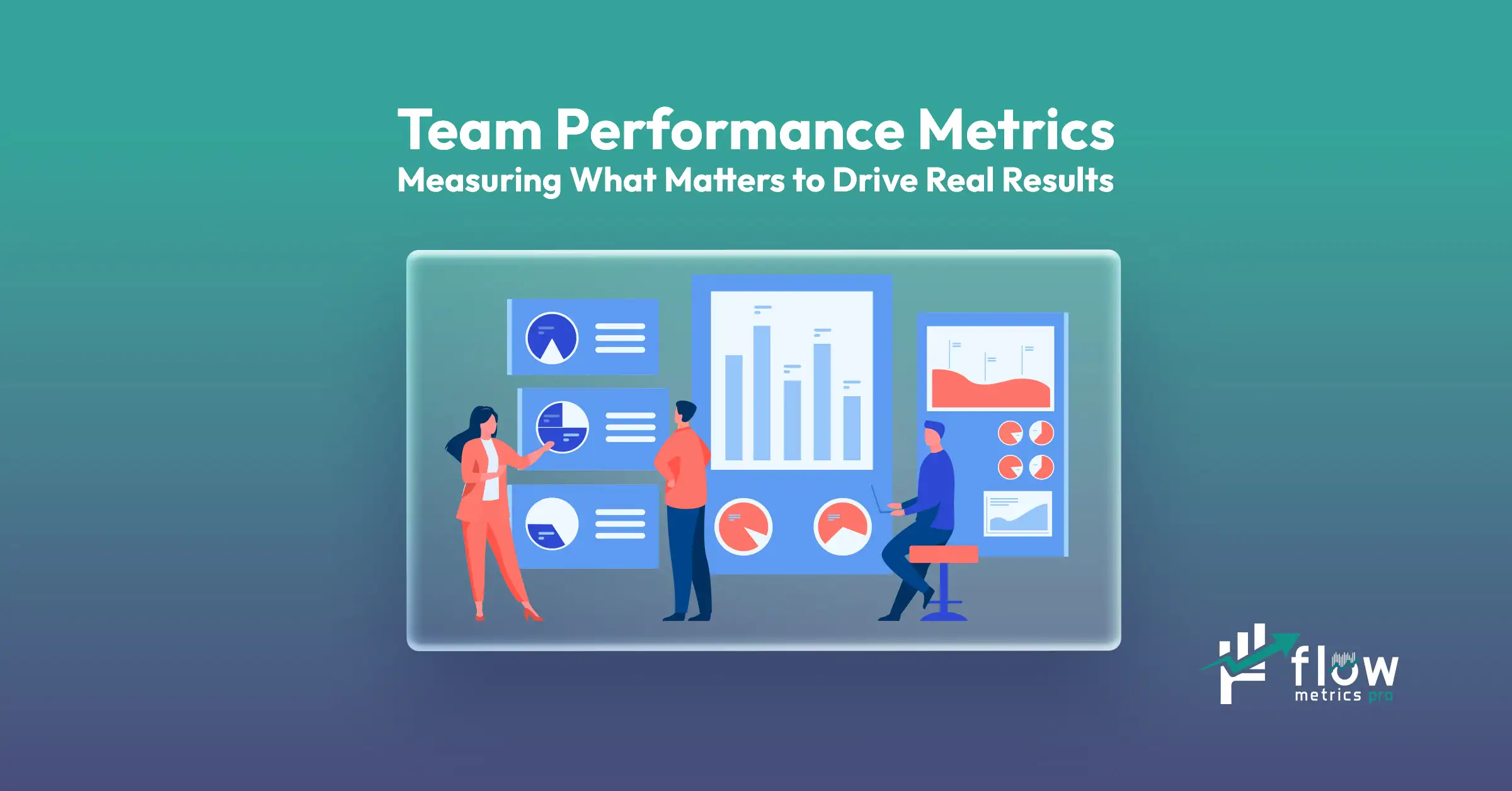
- Visualize Performance with Dashboards: Raw data can be overwhelming. Use dashboards and visual reports to present key metrics in an easily digestible format. Visualizations are powerful for highlighting trends, comparing performance over time, and spotting anomalies at a glance. Always review data with context—a dip in productivity might be due to a holiday week, not a performance issue.
- Analyze Patterns, Not Just Snapshots: Avoid making knee-jerk decisions based on a single data point. Look for recurring patterns over weeks or months. Is one process consistently causing delays? Is a particular team member consistently overloaded? Long-term trend analysis leads to more strategic and sustainable solutions.
- Act on the Insights: The most critical step is to use your findings to drive change. Turn data into actionable steps:
- Optimize Inefficient Processes: If cycle times are long, map out the workflow and remove bottlenecks.
- Rebalance Workloads: If one person is overloaded while another is underutilized, reassign tasks.
- Provide Targeted Coaching: If an individual’s error rate is high, offer specific training or mentoring.
Tools to Track and Improve Team Performance
While spreadsheets can offer a basic starting point, they are not built for the dynamic needs of modern teams. They lack real-time visibility, require manual data entry, and fail to provide deep, actionable insights.
To truly optimize performance, organizations need tools designed for this purpose. An ideal solution should automate data collection, provide clear visualizations, and help leaders connect effort to outcomes without resorting to surveillance. Platforms like Flow Metrics Pro are designed to provide this clarity, offering insights into productivity, workflow efficiency, and project profitability. By turning raw data into actionable intelligence, such tools empower managers to lead more effectively.
Conclusion: Use Measurement to Unlock Improvement
The path to building a high-performing team begins with a commitment to visibility and accountability. When you measure what matters, you empower your team to understand their impact, identify their own challenges, and contribute to a culture of continuous improvement. Vague goals and subjective feedback create confusion, while clear, data-driven insights pave the way for focused action.
By tracking the right team performance metrics, you move beyond simply monitoring activity to truly understanding effectiveness. You can pinpoint inefficiencies, celebrate successes, and make strategic decisions that align daily work with long-term goals. The process starts with measurement, but it leads to meaningful and lasting improvements in performance, morale, and business results.