Making critical business decisions based on gut feeling alone is no longer enough. Organizations are turning to workforce analytics to gain deep insights into their most valuable asset: their people. By leveraging employee data, companies can make informed decisions that directly impact productivity, retention, and overall business success.
In this comprehensive guide, we’ll explore everything you need to know about workforce analytics—from fundamental concepts to advanced implementation strategies. Whether you’re an HR professional, business leader, or team manager, understanding how to harness the power of workforce data can transform your organization’s performance.
Understanding Workforce Analytics: Beyond the Basics
Workforce analytics represents the systematic approach to collecting, analyzing, and interpreting employee-related data to make strategic business decisions. This methodology goes far beyond simple headcount reports or attendance tracking. Instead, it encompasses a comprehensive view of your workforce through multiple data points including performance indicators, engagement levels, skill assessments, compensation structures, and behavioral patterns.
Think of workforce analytics as your organization’s intelligence system for human capital. Just as financial analytics helps you understand monetary flows, workforce analytics illuminates the human dynamics that drive your business forward. It answers critical questions: Why are your top performers leaving? Which teams consistently exceed expectations? What factors contribute to employee satisfaction? How can you optimize your talent investment?
The sophistication of modern workforce analytics has evolved dramatically. Organizations now utilize advanced statistical models, machine learning algorithms, and predictive analytics to forecast trends and identify patterns that would be impossible to detect through manual observation. This analytical approach enables companies to move from reactive problem-solving to proactive strategic planning.
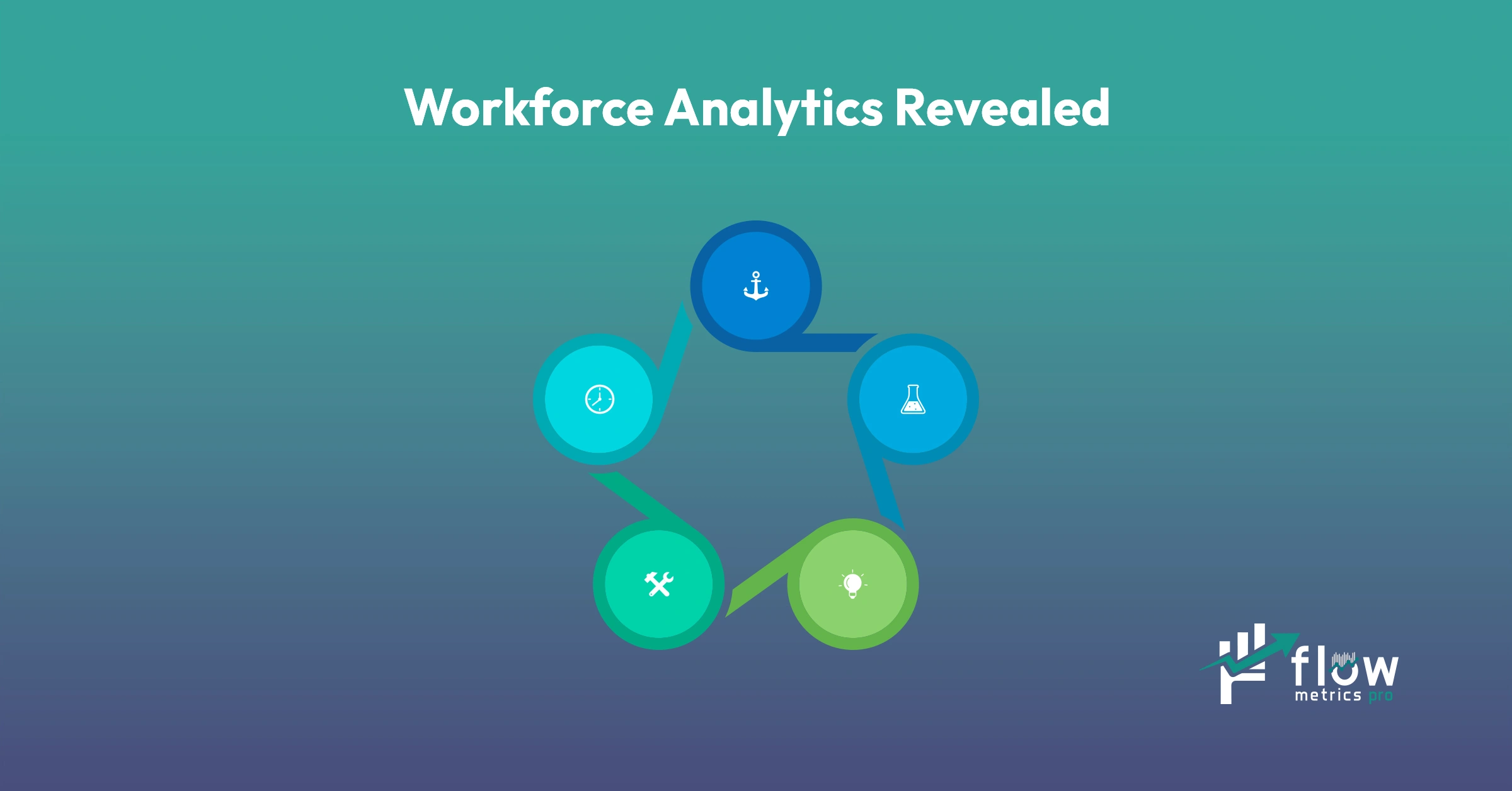
The Four Pillars of Workforce Analytics
Understanding the different types of workforce analytics helps organizations choose the right approach for their specific needs. Each type serves a distinct purpose in the analytical framework.
Descriptive Analytics: Understanding What Happened
Descriptive workforce analytics forms the foundation of data analysis by examining historical and current workforce data. This approach identifies trends, patterns, and relationships within your employee population. Organizations use descriptive analytics to understand turnover patterns, analyze demographic distributions, track performance trends over time, and identify seasonal fluctuations in productivity.
For instance, descriptive analytics might reveal that your marketing department experiences 25% higher turnover than other departments, or that employee engagement scores decline during specific quarters. These insights provide the context necessary for deeper investigation.
Diagnostic Analytics: Discovering Why It Happened
Once you identify patterns through descriptive analytics, diagnostic workforce analytics helps uncover the root causes. This analytical approach digs deeper into the “why” behind workforce trends. It examines correlations between various factors and outcomes, helping organizations understand the underlying drivers of employee behavior.
Diagnostic analytics might reveal that high turnover in your marketing department correlates with limited career advancement opportunities or that engagement drops coincide with increased overtime hours. By understanding these causal relationships, organizations can address fundamental issues rather than treating symptoms.
Predictive Analytics: Forecasting Future Outcomes
Predictive workforce analytics leverages historical data and statistical algorithms to forecast future trends and outcomes. This forward-looking approach enables organizations to anticipate challenges and opportunities before they materialize. Companies use predictive analytics to identify employees at risk of leaving, forecast future hiring needs, predict performance trajectories, and anticipate skill gaps.
Advanced predictive models can achieve remarkable accuracy. Research from MIT Sloan Management Review indicates that organizations using predictive workforce analytics can reduce turnover by up to 30% by identifying at-risk employees and implementing targeted retention strategies.
Prescriptive Analytics: Recommending Actions
Prescriptive workforce analytics represents the most advanced level of analysis, providing specific recommendations for action. This approach considers multiple scenarios and suggests optimal strategies based on your organization’s goals and constraints. It answers questions like: What’s the best way to allocate resources? Which interventions will have the greatest impact on engagement? How should we structure our teams for maximum efficiency?
Transformative Benefits of Workforce Analytics
Organizations that effectively implement workforce analytics experience substantial benefits across multiple dimensions. These advantages extend beyond HR departments, influencing overall business performance and competitive positioning.
Enhanced Strategic Decision-Making
Workforce analytics eliminates guesswork from critical talent decisions. Instead of relying on intuition or anecdotal evidence, leaders can base decisions on concrete data and proven patterns. This data-driven approach leads to more accurate hiring decisions, better resource allocation, and strategic workforce planning that aligns with business objectives.
According to Deloitte’s Human Capital Trends report, organizations with mature analytics capabilities are twice as likely to improve their leadership pipelines and three times more likely to improve their recruiting efficiency compared to those without analytical capabilities.
Optimized Talent Acquisition
Traditional hiring processes often involve significant trial and error. Workforce analytics revolutionizes recruitment by identifying the characteristics, experiences, and attributes that predict success in specific roles. By analyzing your top performers, you can create detailed profiles that guide your talent search.
This analytical approach extends beyond initial hiring. Organizations can track time-to-hire metrics, source effectiveness, candidate quality scores, and early performance indicators. These insights enable continuous improvement in recruitment strategies, reducing hiring costs while improving quality of hire.
Reduced Employee Turnover
Employee turnover costs organizations significantly—often 50% to 200% of an employee’s annual salary when considering recruitment, training, and lost productivity (as reported by the Society for Human Resource Management). Workforce analytics helps organizations understand turnover patterns and implement preventive measures.
By identifying early warning signs of disengagement or dissatisfaction, companies can intervene before valued employees decide to leave. Research from LinkedIn shows that companies with strong analytics programs experience 30-40% lower turnover rates than industry peers.
Improved Employee Engagement and Productivity
Understanding what drives employee engagement allows organizations to create targeted interventions that boost morale and performance. Workforce analytics reveals which factors most strongly correlate with high engagement—whether it’s recognition programs, flexible work arrangements, career development opportunities, or management practices.
Studies from Gallup demonstrate that highly engaged teams show 21% greater profitability and 17% higher productivity than teams with low engagement levels. Flow Metrics Pro enables organizations to track these critical engagement metrics and identify opportunities for improvement.
Enhanced Workforce Planning
Strategic workforce planning requires accurate forecasting of future talent needs. Workforce analytics provides the data necessary to anticipate skills gaps, succession planning needs, and organizational capacity requirements. This foresight enables proactive talent development rather than reactive scrambling to fill critical positions.
Organizations can model different growth scenarios, assess current talent bench strength, identify potential leaders, and develop targeted training programs. This forward-looking approach ensures that talent capabilities align with business strategy.
Essential Workforce Analytics Metrics
Effective workforce analytics depends on tracking the right metrics. While organizations may customize their dashboards based on specific needs, certain fundamental metrics provide universal value.
Turnover Rate and Retention Metrics
Employee turnover rate measures the percentage of employees who leave your organization during a specific period. Calculate it using this formula: (Number of Separations / Average Number of Employees) × 100. However, sophisticated analysis goes beyond simple turnover rates to examine voluntary versus involuntary turnover, regrettable versus non-regrettable losses, and turnover by department, role, or tenure.
Industry benchmarks vary significantly. According to Gartner HR Research, technology companies average 13-15% annual turnover, while retail organizations may experience 60% or higher. Understanding your turnover in context allows for meaningful analysis and goal-setting.
Time-to-Hire and Recruitment Efficiency
Time-to-hire measures the duration from when a candidate enters your recruitment pipeline to when they accept an offer. This metric reveals recruitment efficiency and helps identify bottlenecks in your hiring process. The average time-to-hire across industries is approximately 36 days, though this varies by role complexity and seniority level.
Related metrics include time-to-fill (from job opening to acceptance), source of hire effectiveness, candidate quality scores, and offer acceptance rates. Together, these metrics provide a comprehensive view of recruitment performance.
Employee Productivity Indicators
Measuring productivity requires role-appropriate metrics. For sales teams, revenue per employee provides a clear indicator. For project-based work, completion rates and quality scores offer insights. Customer service teams might track resolution times and satisfaction scores.
Research indicates that highly productive employees generate 400% more output than average performers in complex roles. Identifying factors that contribute to this exceptional performance enables organizations to replicate success across teams.
Engagement and Satisfaction Scores
Employee engagement encompasses emotional commitment, motivation levels, and connection to organizational purpose. Regular pulse surveys, annual engagement assessments, and continuous feedback mechanisms help track this critical metric. The average employee engagement score across U.S. companies is approximately 34%, according to Gallup research, indicating substantial room for improvement in most organizations.
Absenteeism and Attendance Patterns
Unplanned absences cost organizations significantly through lost productivity and replacement costs. Track absence rates, patterns in absences (day of week, time of year), and correlations with other factors like management changes or workload increases. Benchmark data from SHRM suggests that unscheduled absenteeism costs approximately $1,800 per employee annually.
Training ROI and Skill Development
Organizations invest substantially in employee development. Measuring training effectiveness ensures that these investments generate a return. Track skill acquisition rates, performance improvements post-training, application of learned skills, and correlation between training and career advancement.
According to the American Society for Training and Development’s research report “Profiting from Learning,” companies with comprehensive training programs enjoy 218% higher income per employee than companies without formalized training, demonstrating the value of strategic skill development.
Real-World Applications of Workforce Analytics
Understanding theoretical concepts matters less than seeing how organizations practically apply workforce analytics to solve business challenges. These examples illustrate the diverse applications across different organizational contexts.
Predicting and Preventing Turnover
A mid-sized technology company noticed increasing turnover among software engineers. Through workforce analytics, they identified several patterns: engineers who received fewer than three development opportunities annually were 40% more likely to leave, team members with managers rated below average in feedback quality had 35% higher turnover, and engineers working more than 50 hours weekly for extended periods showed elevated flight risk.
Armed with these insights, the company implemented targeted interventions including mandatory career development planning, manager training on feedback delivery, and workload monitoring systems. Within 18 months, engineering turnover dropped by 28%.
Optimizing Workforce Allocation
A retail organization used workforce analytics to optimize store staffing. By analyzing sales data, foot traffic patterns, and employee productivity across hundreds of locations, they identified optimal staffing levels for different times and days. The analysis revealed that staffing based on historical patterns rather than predicted demand led to either overstaffing during slow periods or understaffing during peak times.
The company implemented predictive scheduling based on analytics, resulting in 15% improvement in labor cost efficiency while simultaneously improving customer service scores by reducing wait times during busy periods.
Improving Diversity and Inclusion
A financial services firm committed to improving workplace diversity but struggled with retention of diverse talent. Workforce analytics revealed that diverse hires experienced slower promotion rates and lower engagement scores than majority peers, despite equivalent performance ratings.
Further analysis identified specific teams and managers where disparities were most pronounced. The company implemented targeted interventions including unconscious bias training, revised promotion criteria, and mentorship programs. These data-driven initiatives led to measurably improved outcomes for diverse employees and a 25% increase in diverse representation at leadership levels over three years.
Enhancing Performance Management
A manufacturing company transitioned from annual performance reviews to continuous performance management supported by workforce analytics. They tracked real-time performance metrics, frequent feedback exchanges, and goal progress. The analytics revealed that employees receiving weekly feedback achieved goals 31% more frequently than those receiving only quarterly reviews.
The company redesigned their performance management approach based on these findings, implementing weekly check-ins and data dashboards for employees and managers. Employee engagement scores increased by 22%, and productivity metrics improved by 18%.
Who Benefits from Workforce Analytics?
Workforce analytics delivers value across organizational hierarchies. Different stakeholders utilize these insights in various ways to enhance their effectiveness and informed decision-making.
Human Resources Professionals
HR teams represent the primary users and beneficiaries of workforce analytics. These professionals use analytics to optimize recruitment processes, design effective retention programs, identify training needs, measure program effectiveness, and demonstrate HR’s strategic value to leadership. Analytics transforms HR from an administrative function to a strategic business partner that drives organizational performance.
Business Leaders and Executives
C-suite executives and senior leaders rely on workforce analytics for strategic planning and resource allocation. They use these insights to align talent strategy with business objectives, make informed decisions about organizational structure, assess leadership bench strength, and forecast workforce costs and needs. High-quality workforce analytics enables leaders to view human capital as a strategic asset requiring optimization and investment.
Department Managers and Team Leaders
Front-line managers use workforce analytics to enhance team performance and employee development. These leaders leverage analytics to understand individual and team productivity patterns, identify training and support needs, recognize and reward top performers, and address performance issues proactively. Analytics empowers managers with objective data to support coaching conversations and development planning.
Employees
While often overlooked, employees themselves benefit from workforce analytics. Transparent analytics help team members understand how their performance compares to expectations, identify areas for professional development, see how their contributions impact organizational goals, and access data-driven career guidance. This transparency can increase motivation and engagement when implemented thoughtfully.
Implementing Workforce Analytics: A Strategic Roadmap
Successfully implementing workforce analytics requires careful planning and systematic execution. Organizations that follow a structured approach achieve better outcomes and faster value realization.
Phase 1: Establish Clear Objectives
Begin by defining specific business questions you want to answer through workforce analytics. Vague goals like “improve HR” lead to unfocused efforts and disappointment. Instead, articulate precise objectives such as “reduce turnover in sales roles by 20% within 18 months” or “improve time-to-productivity for new hires by 30%.”
Align these objectives with broader business strategy. Workforce analytics should support organizational priorities, whether that’s growth, operational efficiency, innovation, or market expansion. Secure leadership buy-in by demonstrating how analytics will address pressing business challenges and create measurable value.
Phase 2: Assess Data Availability and Quality
Evaluate what data you currently collect and its quality. Common sources include HRIS systems, applicant tracking systems, performance management platforms, time and attendance systems, learning management systems, and engagement survey tools. Identify gaps between available data and what you need to answer your priority questions.
Data quality directly impacts analytical accuracy. Establish standards for data completeness, accuracy, consistency, and timeliness. Address systematic quality issues before investing heavily in advanced analytics. Bad data leads to bad decisions, regardless of analytical sophistication.
Phase 3: Select Appropriate Technology
Choose workforce analytics tools that match your organizational needs and technical capabilities. Options range from basic reporting in existing HRIS platforms to sophisticated analytics platforms with machine learning capabilities. Consider factors including integration with existing systems, user-friendliness for non-technical users, scalability as needs grow, security and privacy features, and vendor support and training.
Many organizations start with simpler tools and gradually adopt more advanced platforms as analytical maturity increases. This evolutionary approach reduces risk and builds organizational capability progressively.
Phase 4: Build Analytical Capabilities
Technology alone doesn’t deliver results. Organizations need people with skills to extract insights from data and translate findings into action. Depending on your scale and ambitions, you might hire dedicated people analytics professionals, train existing HR team members in analytical skills, or partner with external consultants for specialized projects.
Foster a data-driven culture by encouraging curiosity and experimentation, sharing insights broadly across the organization, celebrating evidence-based decisions, and providing training on data literacy to leaders at all levels.
Phase 5: Start with Quick Wins
Identify opportunities for relatively simple analyses that can demonstrate value quickly. These early successes build momentum and support for expanded analytics initiatives. Examples might include analyzing the source of hire effectiveness, identifying top-performer characteristics, mapping skills gaps, or tracking early indicators of flight risk.
Document and communicate these wins to build organizational credibility for the workforce analytics function. Success stories from internal projects are more compelling than theoretical benefits.
Phase 6: Scale and Sophisticate
As analytical capabilities mature, gradually tackle more complex questions and implement advanced techniques. Move from descriptive to predictive and prescriptive analytics. Expand from isolated analyses to integrated dashboards that provide ongoing visibility into workforce metrics. Develop more sophisticated models that account for multiple variables and interactions.
Continuously evaluate and refine your approach based on what works in your organizational context. Workforce analytics is an iterative practice that improves through experience and learning.
Overcoming Common Challenges
Organizations implementing workforce analytics frequently encounter predictable obstacles. Anticipating these challenges enables proactive mitigation strategies.
Data Privacy and Ethics Concerns
Employee data analysis raises legitimate privacy considerations. Organizations must balance analytical value with employee rights and expectations. Establish clear policies governing data collection, use, and retention. Communicate transparently with employees about what data is collected and how it’s used. Ensure compliance with relevant regulations including GDPR, CCPA, and industry-specific requirements.
Ethical considerations extend beyond legal compliance. Consider the potential negative impacts of analytics-driven decisions and implement safeguards against algorithmic bias. Regularly audit analytical models for fairness across demographic groups.
Resistance to Change
Introducing data-driven decision-making can threaten managers accustomed to relying on experience and intuition. Address this resistance through education about analytics benefits, involvement of skeptics in pilot projects, training that builds confidence with data, and recognition of analytical successes.
Position workforce analytics as augmenting rather than replacing human judgment. The goal is informed decision-making that combines data insights with contextual understanding and professional experience.
Data Integration Challenges
Organizations typically store workforce data across multiple systems that don’t communicate seamlessly. Integrating disparate data sources for comprehensive analysis requires technical expertise and sustained effort. Consider whether to pursue comprehensive data integration or start with analyses using readily available data while working toward better integration.
Cloud-based platforms increasingly offer pre-built integrations that reduce technical complexity. Evaluate whether these solutions meet your needs more cost-effectively than custom integration projects.
Interpreting Results Appropriately
Statistical literacy among HR professionals and business leaders varies widely. Misinterpreting analytics results leads to flawed decisions. Invest in building analytical capabilities across your team. Ensure that people interpreting data understand concepts like correlation versus causation, statistical significance, sample size limitations, and confounding variables.
Consider establishing an analytics review process where multiple perspectives evaluate findings before they inform major decisions. This collaborative approach improves analytical quality and builds organizational confidence in results.
The Future of Workforce Analytics
Workforce analytics continues evolving rapidly as technology advances and organizational needs shift. Several trends are shaping the future of this field.
Artificial Intelligence and Machine Learning
AI and machine learning algorithms increasingly power workforce analytics, enabling more sophisticated pattern recognition and prediction. These technologies can process vast datasets to identify subtle relationships that humans might miss. Natural language processing analyzes text data from employee surveys, exit interviews, and internal communications to extract sentiment and themes.
However, as noted by McKinsey & Company, AI also introduces risks around algorithmic bias and black-box decision-making. Organizations must implement responsible AI practices that ensure transparency, fairness, and human oversight of algorithmic recommendations.
Real-Time Analytics
Traditional workforce analytics relied on periodic data snapshots and retrospective analysis. Real-time analytics provides continuous visibility into workforce dynamics, enabling immediate responses to emerging trends. This shift from periodic reports to always-on dashboards changes how organizations monitor and manage their workforce.
Real-time capabilities are particularly valuable for operational decisions like staffing adjustments, absence management, and performance tracking. However, they require more sophisticated data infrastructure and thoughtful consideration of when real-time information truly adds value versus creating information overload.
Employee Experience Analytics
Organizations are expanding analytics beyond traditional HR metrics to encompass the entire employee experience. This holistic approach considers physical workspace quality, digital tool effectiveness, social connections, and career journey satisfaction. Experience analytics helps identify friction points in the employee lifecycle and opportunities to enhance satisfaction and engagement.
Skills-Based Analytics
As work becomes more dynamic and roles evolve rapidly, skills-based workforce analytics gains importance. Rather than focusing solely on job titles and organizational position, these approaches analyze skills inventories, skill adjacencies, learning velocity, and skill supply-demand dynamics. This granular view enables more flexible workforce planning and career development.
Getting Started: Your Next Steps
If you’re ready to harness the power of workforce analytics for your organization, consider these practical next steps to begin your journey.
Conduct a Readiness Assessment
Evaluate your current state across key dimensions including data availability and quality, technical infrastructure, analytical skills within your team, leadership support for data-driven decision-making, and organizational culture around transparency and change. This assessment reveals where to focus initial efforts and what gaps to address.
Define Your Priority Use Case
Rather than trying to implement comprehensive workforce analytics all at once, select one high-impact use case to address first. Choose something that matters to business leaders, has available data to analyze, can demonstrate results within 3-6 months, and builds skills transferable to other projects.
Build Your Team and Partnerships
Assemble the right combination of people to drive success including HR business partners who understand organizational needs, data analysts with statistical expertise, IT professionals for systems integration, business leaders who will use insights, and external consultants if specialized expertise is needed.
Measure and Communicate Impact
Track both process metrics (data quality improvements, analytical projects completed) and outcome metrics (business problems solved, value created). Regularly communicate findings and successes to stakeholders. Use storytelling to make data insights compelling and actionable. Celebrate wins while being transparent about lessons learned from less successful initiatives.
Conclusion: Transforming Potential into Performance
Workforce analytics represents far more than a technological trend or HR initiative. It fundamentally transforms how organizations understand and optimize their most valuable asset—their people. By systematically collecting, analyzing, and acting on workforce data, companies can make better hiring decisions, reduce costly turnover, boost productivity, and create more engaging work environments.
The journey toward analytical maturity requires commitment, investment, and persistence. Organizations that embrace this transformation position themselves for sustained competitive advantage in increasingly talent-driven markets. The insights gained through workforce analytics enable leaders to move from reactive problem-solving to proactive strategic planning, from gut-feeling decisions to evidence-based choices, and from managing people to truly optimizing human potential.
Whether you’re just beginning to explore workforce analytics or looking to mature your existing capabilities, the path forward starts with clarity about what you want to achieve and commitment to letting data guide your decisions. The tools and techniques are available; what matters most is the will to transform how your organization thinks about and manages its workforce.
In an era where talent makes the difference between market leaders and laggards, workforce analytics provides the intelligence necessary to win the war for talent and maximize human capital returns. The organizations that master this discipline will thrive in the decades ahead.
References
- MIT Sloan Management Review (2024). “The Strategic Value of Predictive Workforce Analytics.”
https://sloanreview.mit.edu/article/predictive-workforce-analytics/ - Deloitte. “2025 Global Human Capital Trends Report.”
https://www2.deloitte.com/us/en/insights/focus/human-capital-trends.html - LinkedIn Talent Solutions (2025). “Global Recruiting Trends Report.”
https://business.linkedin.com/talent-solutions/recruiting-tips/global-recruiting-trends - Gallup. “State of the Global Workplace: 2025 Report.”
https://www.gallup.com/workplace/349484/state-of-the-global-workplace.aspx - Society for Human Resource Management (SHRM). “The Real Costs of Employee Turnover.”
https://www.shrm.org/topics-tools/news/employee-turnover-costs - McKinsey & Company (2024). “The Future of People Analytics.”
https://www.mckinsey.com/capabilities/people-and-organizational-performance/our-insights/the-organization-blog/the-future-of-people-analytics - Harvard Business Review. “The New Analytics of Workforce Planning.”
https://hbr.org/2020/03/the-new-analytics-of-workforce-planning - Gartner HR Research (2025). “Top Priorities for HR Leaders.”
https://www.gartner.com/en/human-resources/trends/top-priorities-for-hr-leaders